US 90% Silver Coins (pre-1965)
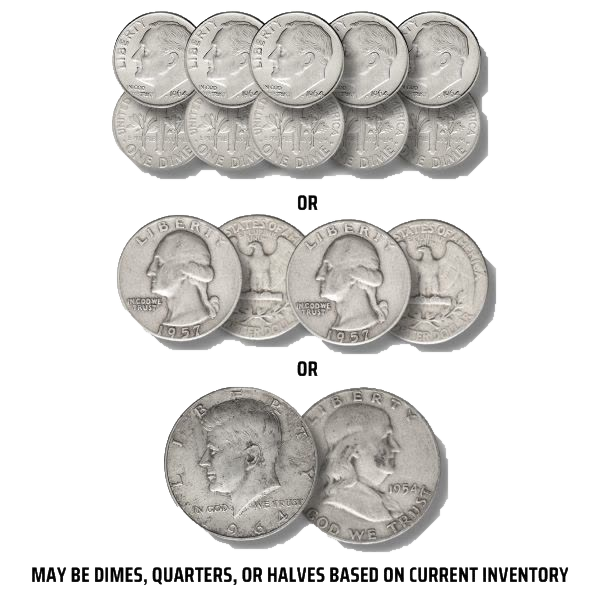
Pre-1965 American dimes, quarters and half dollars, bought for the silver they once carried through everyday life.
These circulated 90% silver coins offer familiar designs in small individual units. Lots are quoted by face value, with the denomination mix and estimated silver content explained before purchase.
Circulated U.S. silver coins: 90% silver from an earlier era of American coinage
The nickname “junk silver” can be misleading. It usually refers to circulated silver coins bought for their metal content rather than rarity. These older U.S. coins contain 90% silver. We'll walk through face value, silver weight and wear so the price makes sense.
Often called constitutional silver or “junk silver” in the bullion trade, they are not bought here as rare, individually graded collectibles. The appeal is ordinary American coinage with actual silver inside it, divided into small units that remain easy to recognize as coins.
Ninety percent silver, with circulation in its history
The relevant pre-1965 dimes, quarters and half dollars were made with 90% silver and 10% copper. Designs in a lot can vary by denomination and era. Circulation leaves wear, so these coins should not be described as newly minted bullion or promised in pristine condition.
The year distinction matters. A 1964 Kennedy half dollar is 90% silver; the 1965–1970 Kennedy half dollars use a different, 40% silver composition and are not the product described here. Nor should “pre-1965 silver” be taken to mean every old American coin—nickels and other denominations require their own identification.
Face-value quoting is a bullion convention
Lots are commonly quoted by the sum of their denominations. A dollar of face value could be ten dimes, four quarters or two half dollars. It is the same face-value amount, not a claim that the lot costs one dollar or contains a full troy ounce of silver.
The catalogue uses approximately 0.715 troy ounce of silver per dollar of face value as the conventional circulated-coin estimate. Actual wear and the composition of the lot matter. LGS explains the denomination mix and silver-content basis of the proposed lot so the arithmetic is clear before you purchase.
Why choose circulated silver instead of modern bullion?
These coins offer smaller individual pieces than a one-ounce silver coin, with the character of currency that already lived an American life. They may appeal to a buyer who values historical familiarity, wants many separate units or likes the idea of silver in recognizable dimes, quarters and halves.
Compare a proposed lot by estimated silver content and full price, not by face value alone. This 90% silver product is different from modern fine-silver IRA bullion and should not be assumed acceptable for an IRA. For a personal purchase, ask LGS for the available lot and a clear explanation of the coins it contains.
Coin Details
- Manufacturer
- United States Mint
- Metal
- Silver
- Silver content
- Sold by face value; roughly 0.715 troy oz of silver per dollar of face value
- Purity
- 90% silver
- Quoting convention
- Dollar face value, not dollars of purchase price
- Composition
- 90% silver / 10% copper
- IRA eligibility
- Ask about IRA eligibility
Buy silver with service beyond the sale
Call Liberty Gold Silver for current pricing on this coin. Your specialist identifies the exact product, explains the complete purchase price and arranges Private Home Delivery or, for an accepted IRA product, coordination with the custodian and approved depository.
Every purchase includes insured delivery. We remain available for questions about your holdings and buybacks. Once you are a client, you are a client for life.
Related Products
This article is educational. It is not a recommendation to buy or sell anything, and it does not consider your circumstances. Prices can move in either direction.